
Reversing the Innovation Process
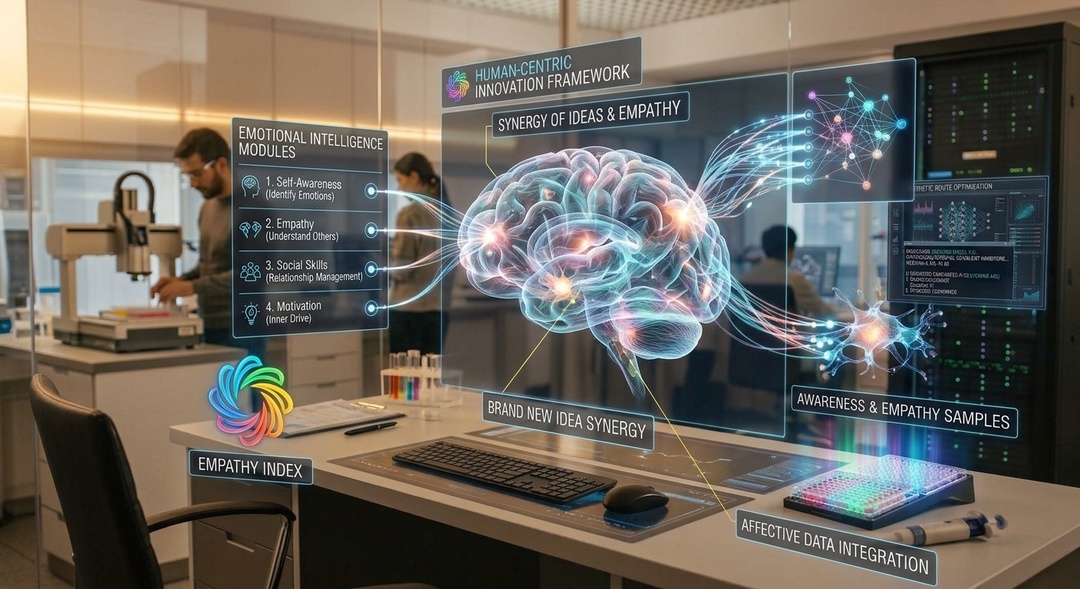
Adding emotional intelligence to a global company's existing innovation tools
Initial Problem
A global leader in snacking wanted to upgrade the way its existing innovation tools identified white-space opportunities and generated new product ideas.
Like many sophisticated global companies, it already possessed extensive consumer data, category knowledge, innovation processes and proprietary digital tools.
The challenge was not access to more information.
It was the logic used to search for opportunities.
Innovation typically asks:
“What could be the next star product?”
Teams explore trends, flavors, formats, ingredients, consumer preferences and emerging behaviours and then attempt to identify promising concepts.
BRAND AVIATORS® proposed reversing the process.
Instead of starting with products, ask:
Which deep human motive is currently underserved in this category?
Then build the product specifically to satisfy it.
Diagnostic Insight
Products are not simply functional groupings of ingredients and attributes.
In the human mind, categories occupy mental and emotional territories connected with fundamental motivations such as safety, desire, play, control, growth, connection or transformation.
Existing brands populate those territories unevenly.
Some motivational spaces become crowded.
Others remain relatively underserved.
This creates a different definition of white space.
A white space is not necessarily:
an ingredient nobody has used,
a flavor nobody has launched,
or a format nobody has tried.
It can be an:
UNMET EMOTIONAL TERRITORY
THE WHEEL OF MOTIVES® provides a framework for mapping the motivational landscape of a category, understanding where existing brands compete and identifying deeper human needs that remain insufficiently addressed.
The opportunity therefore exists before the product does.
Intervention
Rather than introducing another external innovation platform, BRAND AVIATORS® helped the company explore how the principles behind THE WHEEL OF MOTIVES® and Emotion Design™ could upgrade its existing proprietary innovation tools and processes.
This was particularly important for a large global organization that preferred to retain its own technology infrastructure, data and workflows.
The innovation logic was reversed:
TRADITIONAL APPROACH
Trends → Ideas → Products → Testing → Positioning
EMOTION-DRIVEN APPROACH
Category → Motivational Map → Unmet Human Motive → Emotional White Space → Product Experience → Formulation & Design
Once an underserved motive is identified, it becomes the emotional brief for innovation.
Teams can then ask:
What should this motive taste like?
What texture expresses it?
Which sensory experience reinforces it?
What should the packaging communicate?
Which colors, forms, materials and sounds belong to this emotional world?
What narrative makes the experience meaningful?
The tool therefore moves from helping teams find product ideas to helping them design coherent emotional systems.
Before
Traditional white-space innovation can easily begin with what is visible in the market:
Trends. Ingredients. Formats. Flavors. Occasions. Consumer requests. Competitive launches.
These are valuable inputs.
But competitors often have access to similar trends, data and AI capabilities.
As innovation technology becomes democratized, everyone can increasingly identify the same emerging ingredients, analyze the same cultural signals and generate similar product concepts.
The result can be faster innovation converging toward greater sameness.
Even when an interesting concept emerges, another problem can appear.
Texture may communicate one emotional meaning.
Flavor another.
Packaging another.
Communication yet another.
Each component may perform well individually, but the product does not form one coherent emotional experience.
Innovation optimizes the parts without necessarily designing the whole.
After
Adding emotional intelligence to the company's existing innovation architecture created a fundamentally different starting point.
Teams could map categories according to the human motives already being served by existing brands and identify motivational territories with greater opportunity.
Innovation could then begin with an unmet emotional need rather than a predetermined product solution.
Once that territory was selected, the product could be built backwards from the desired emotional outcome.
MOTIVE
↓
EMOTIONAL WHITE SPACE
↓
PRODUCT CONCEPT
↓
SENSORY EXPERIENCE
↓
TEXTURE + FLAVOR + INGREDIENTS
↓
PACKAGING + COMMUNICATION
↓
COHERENT PRODUCT EXPERIENCE
Every element could originate from the same emotional foundation.
This reduces the risk that innovation becomes a collection of individually attractive but emotionally disconnected decisions.
It also creates another important strategic filter:
Brand DNA.
An attractive category white space is not automatically right for every brand.
The opportunity must also be credible for the brand seeking to occupy it.
The stronger innovation equation therefore becomes:
BRAND DNA × UNMET CATEGORY MOTIVE = OWNABLE INNOVATION TERRITORY
The objective is not simply novelty.
It is to create products that feel new yet intuitively right—differentiated from existing offers while remaining emotionally coherent with both the brand and the category.
And critically, this intelligence did not require replacing the company's existing systems.
The emotional architecture enhanced the tools the organization already owned.
The Principle
Don't start by asking what product to create. Start by asking which human need remains unanswered.
As AI makes product generation increasingly easy, the competitive advantage shifts upstream.
The difficult question is no longer:
“What else can we make?”
It is:
“What fundamental human motive is nobody satisfying well enough?”
THE WHEEL OF MOTIVES® helps identify that emotional white space.
Emotion Design™ then provides the logic for translating it consistently across concept, formulation, sensory experience, packaging and communication.
The company's existing innovation technology provides the scale.
HUMAN MOTIVE → WHITE SPACE → COHERENT PRODUCT SYSTEM
Because successful products are not simply collections of functional attributes.
They are coherent emotional systems.
And the next breakthrough product may not begin with a breakthrough ingredient.
It may begin with an emotion nobody else has understood how to satisfy.
Have a similar challenge?
Let's explore how human motives can unlock meaning, differentiation and growth for your brand.