
From Planogram To Emotional Experience
Turning the coffee shelf into a journey through human motives
Initial Problem
When a global food and beverage leader took over the grocery distribution of one of the world's most iconic coffeehouse brands, it already owned and managed several major coffee brands.
The expanded portfolio made the company an even more important player in the coffee category, and major retailers increasingly looked to it for leadership in how the entire coffee shelf should be organized.
The conventional answer would have been a better planogram—organizing products by brand, format, price, intensity or other functional criteria.
But we saw a bigger opportunity:
Could the coffee shelf become more than an efficient way of displaying products? Could it become an experience that helps shoppers discover different reasons to drink coffee—and ultimately grow the entire category?
People don't always want the same emotional experience from coffee.
Seen through THE WHEEL OF MOTIVES®, the coffee aisle was therefore not simply a collection of brands and SKUs.
It was a collection of different emotional experiences waiting to be organized.
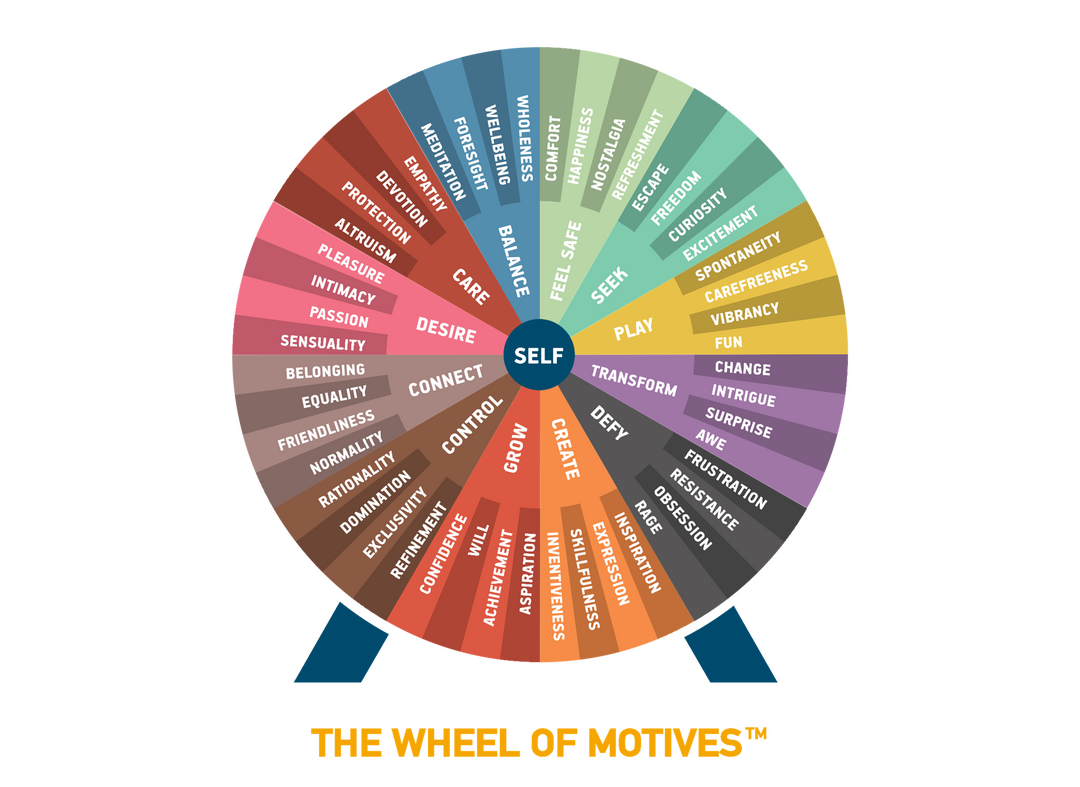
On one occasion, coffee can satisfy the desire to CONNECT—the familiar cup that brings people together.
At another moment, consumers may want to SEEK—discovering unfamiliar origins, flavors and coffee cultures that allow them to travel through taste.
Another coffee can express DESIRE—sensuality, intensity, sophistication and indulgence, evoking experiences such as Italian coffee culture.
INTERVENTION
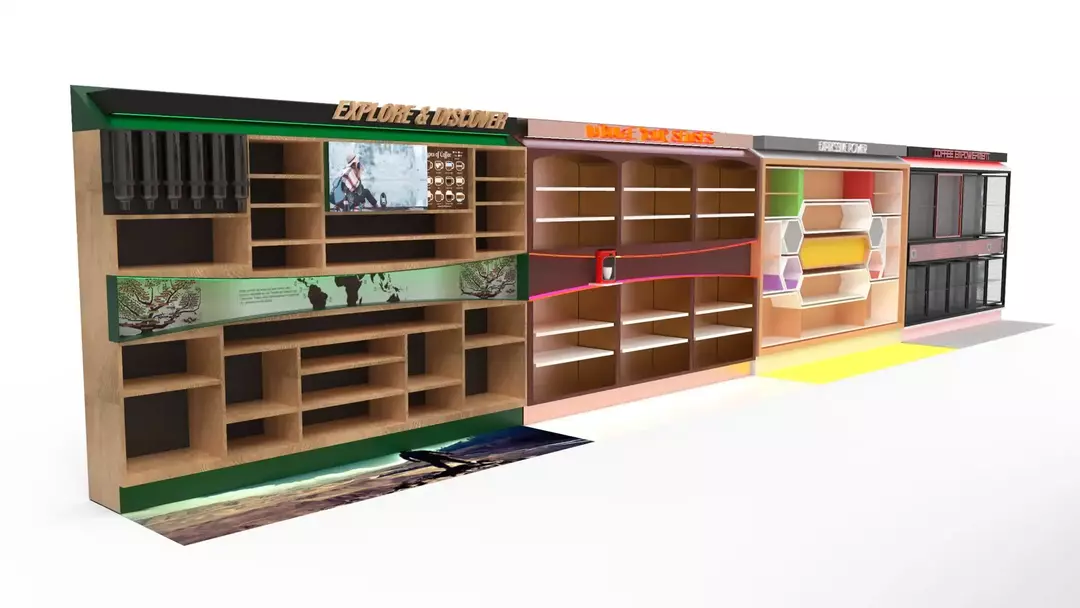
BRAND AVIATORS® went beyond the traditional planogram and redesigned the logic of the coffee shelf around human motives.
Products and brands could be grouped into different motivational worlds, each designed as a distinctive experience.
- A SEEK territory could invite shoppers to travel through coffee—exploring origins such as Java, different cities, cultures, tastes and unexpected discoveries.
- A DESIRE territory could immerse shoppers in a more sensual and sophisticated coffee world, drawing on cues associated with experiences such as Italian coffee culture.
- A CONNECT territory could bring together familiar, social and reassuring coffee experiences associated with sharing and everyday human connection.
BRAND AVIATORS® then designed how these different motivational worlds could be brought to life as experiences—not simply as classifications.
BEFORE
Traditional category management optimized the shelf primarily around where products should go.
Brands, formats, price points, product types and practical shopper navigation determined the architecture.
Efficient—but predominantly functional.
This treated the shopper as someone trying to locate a product rather than as a human being open to discovery, inspiration and different emotional experiences.
The shelf helped people find the coffee they already intended to buy.
It did little to inspire them to want another one.
AFTER
The motivational architecture transformed the coffee aisle from a storage and navigation system into a category experience.
Instead of encountering an overwhelming wall of brands and products, shoppers could enter different emotional worlds and discover coffees according to what they wanted to experience.
They could SEEK and notionally travel through origins, cities, cultures and flavors.
They could enter a world of DESIRE, discovering more sensual, intense or sophisticated coffee experiences.
They could CONNECT through familiar, social coffee rituals and brands associated with togetherness.
This changed the role of the shelf.
It could encourage shoppers to explore rather than simply locate, creating interest and engagement at the point of sale.
And because different motives can coexist within the same person, the architecture created another important possibility: buying more than one coffee for different emotional occasions.
One coffee for everyday connection. Another for discovery. Another for indulgence.
Rather than forcing brands to fight for the same psychological occasion, the system could expand the number of relevant experiences available to the shopper.
The objective was therefore bigger than increasing the performance of an individual brand.
It was to increase engagement, repertoire and sales of the coffee category as a whole.
The Principle
People don't shop categories. They shop for experiences, even when they don't consciously realize it.
Traditional category management organizes products according to what they are.
THE WHEEL OF MOTIVES® adds another dimension by organizing them according to why people might want them.
When those motives are translated into distinct experiences, the shelf can move from navigation to inspiration—from helping shoppers find what they came for to helping them discover what else they might desire.
And because one person can seek different emotional outcomes at different moments, motivational category design can expand repertoire rather than simply redistribute market share.
Don't just organize the shelf. Organize the reasons people want to explore it.
Related Material
Testimonial Shopper Emotional Journey Global Cpg
By sequencing the category according to fundamental human motives, the approach went beyond conventional category organization to create a biologically meaningful journey of discovery: as shoppers moved through the aisle, they progressed through different motivational territories in a way that made intuitive and emotional sense.
Taking a Global CPG Project to Another Level | Phil McGee
In this excerpt from Shoppernomics, host Phil McGee reflects on his first encounter with Dr. Constantinos Pantidos and his book Living Brands, which he describes as a valuable contribution to understanding brands from a neurobiological perspective.
McGee explains why, within the first few minutes of meeting Pantidos, he decided to partner with him on a project for a global CPG company—and how the application of THE WHEEL OF MOTIVES® ultimately took the work to another level.
By sequencing the category according to fundamental human motives, the approach went beyond conventional category organization to create a biologically meaningful journey of discovery: as shoppers moved through the aisle, they progressed through different motivational territories in a way that made intuitive and emotional sense.
The example illustrates a central principle behind THE WHEEL OF MOTIVES®: emotion can be systematically translated into strategy and positioning, and from there into tangible consumer and shopper experiences.
Have a similar challenge?
Let's explore how human motives can unlock meaning, differentiation and growth for your brand.