
PART TWO: Neurobiology at the Heart of Brand Strategy
LID Radio | Episode 104
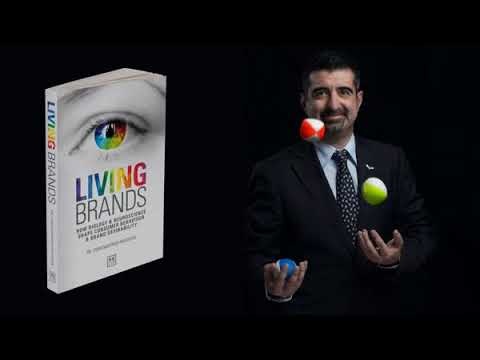
In LID Radio Episode 104, I explore what happens when we put neurobiology at the heart of brand strategy—not simply to understand consumer behaviour, but to turn that understanding into strategy and positioning, and ultimately into what a brand actually says, makes and does.
A central theme of the conversation is the relationship between motives and emotions. It is not a question of choosing one over the other. Emotions are fundamental to human choice, but they can remain difficult for businesses to operationalize. Motives provide a deeper structure for understanding why particular emotions arise, what people are fundamentally seeking and how brands can systematically design around those needs.
This is where THE WHEEL OF MOTIVES® comes in. Developed by bringing together knowledge from biology, affective neuroscience, psychology and other behavioural sciences, the framework organizes the deeper motivational forces behind human behaviour into 12 Fundamental Human Motives.
The objective is to move beyond observing what consumers say, feel or do toward understanding why particular meanings and experiences resonate in the first place. That explanatory power can then inform the most fundamental strategic decisions: what does the brand stand for, what emotional territory can it authentically own, and how should it be positioned?
The discussion addresses one of the most persistent challenges in branding: many organizations cannot clearly articulate what their brand fundamentally stands for. By independently decoding the motives driving both the brand and the category, their intersection can reveal a distinctive territory capable of strengthening the seminal principles of positioning and alignment.
But positioning is only valuable if it can be brought to life. Once the motivational core has been identified, it can be “fertilized” throughout the brand—guiding communication, concepts, products, services, packaging and other consumer touchpoints so that each reinforces the same underlying emotional meaning.
The conversation therefore traces the full journey from neurobiology → human motive → strategy and positioning → tangible brand expression. Emotion moves from something marketers discuss or measure to something businesses can systematically use to guide what they create.
Ultimately, the ambition is not simply to understand emotion, but to design for it—building brands whose strategy, products and experiences are aligned around the deeper biological forces that drive human desire.
Listen to the original LID Radio interview to discover how THE WHEEL OF MOTIVES® turns neurobiology into an actionable system for brand strategy and brand creation.