
Most brands misunderstand the category they compete in.
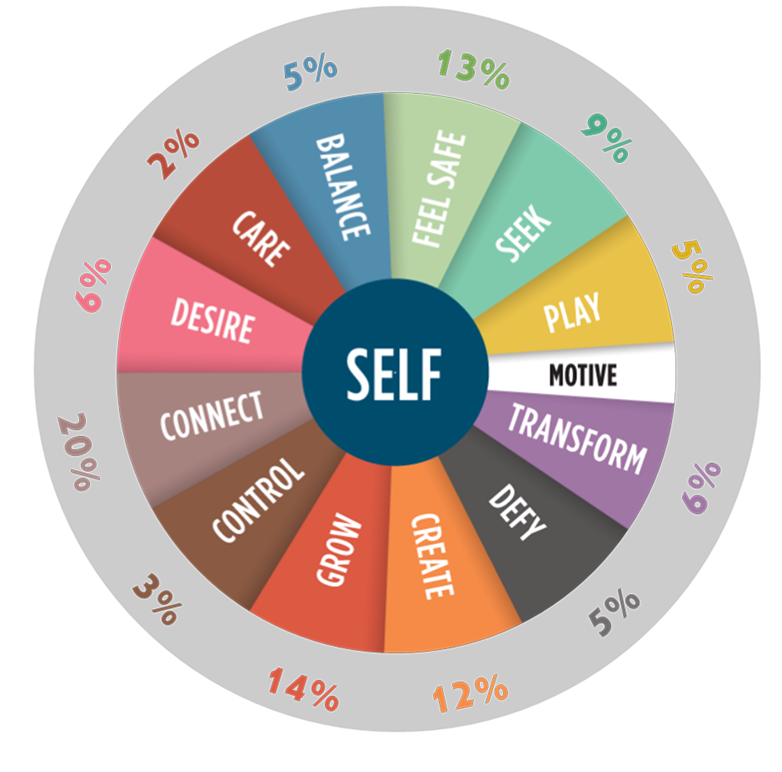
Products are not just functional groupings; they are mental and emotional territories anchored in deeply rooted neural systems such as safety, desire, play, control, or growth.
Categories are not shelves or trends.
They are motivational structures organized by the brain.
The more data brands gather, the less clear the direction becomes.
They rely on :
Segmentation
Brands analyze trends and data, but fail to understand the emotional motives shaping category behavior.
Trends
Without a coherent emotional core, brand decisions drift, weakening consistency, recognition, and long-term meaning.
Behavioral Data
Visuals, messaging, and experiences evolve independently, creating inconsistency and reducing emotional coherence over time.
Categories are not shelves.
They are cognitive structures that simplify a complex world.
FROM : WHAT BRANDS FOCUS ON
- Trends
- Attitudes
- Surface Behavior
- Market Noise
- Fragmented insights
TO : WHAT DRIVES HUMAN CHOICE
- Category Codes
- Human Motives
- Emotional Meaning
- Sensory Expectations
- Decision Heuristics
THE KEY QUESTION
What core neurobiological motives
make people return to this category -
again and again, across time and context?
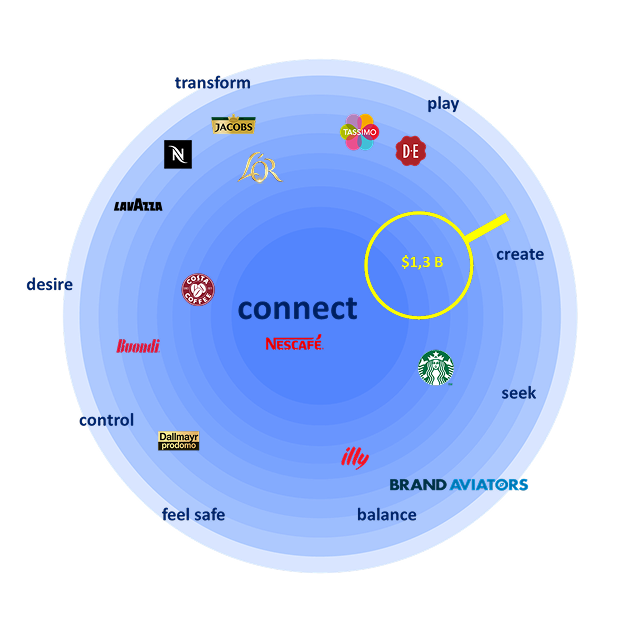
Rather than mapping consumers, we map motives.
Rather than analyzing noise, we identify biological signals.
OUTCOME
The result is not simplification—but precision
Clarity replaces noise
The Category becomes emotionally understandable and strategically coherent.
Differentiation becomes real
Brands stop copying trends and begin owning emotionally meaningful territory.
Strategy becomes grounded
Decisions align around stable emotional systems instead of unstable market signals.