
From Ingredient To Category
Discovering the emotional code that turned a structural component into a cultural territory

Initial Problem
A global leader in snacking faced a fundamental category question.
The product was widely present and familiar to consumers, yet it was not really perceived as a category in its own right.
It was primarily understood as a structural ingredient—something that provided crunch, lightness and texture inside a broader confectionery experience.
The challenge was:
Could something perceived primarily as an ingredient be transformed into a meaningful consumer category with its own emotional role, cultural relevance and reason to exist?
Diagnostic Insight
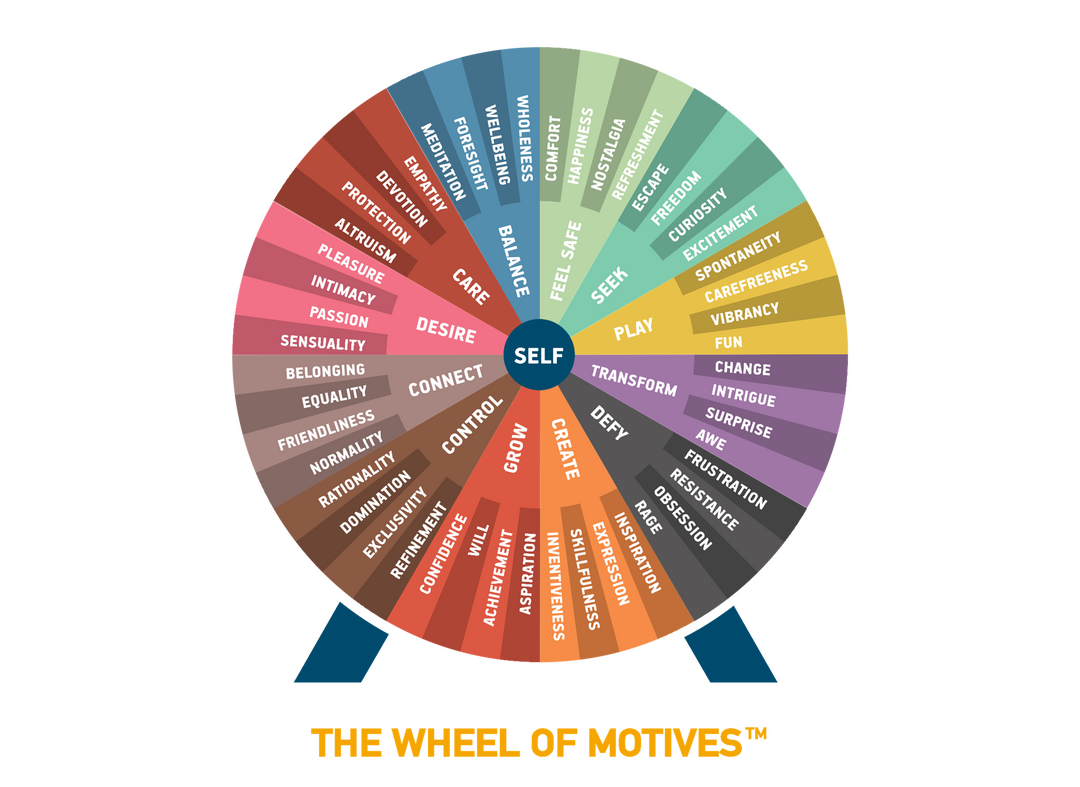
Using THE WHEEL OF MOTIVES®, we looked beyond product attributes to understand why people actually wanted this experience.
The answer revealed an unusual motivational combination:
Consumers were surrounded by increasingly intense, rich and overloaded snacking experiences—more chocolate, more fillings, more indulgence, more sensory excess.
Sometimes they wanted the opposite.
They wanted pleasure, but without being overwhelmed by it.
The product's lightness and characteristic crunch were therefore not merely functional properties.
FEEL SAFE
FEEL SAFE came from familiarity, simplicity and the reassuring pleasure of a light, uncomplicated experience.
CONTROL
Consumers were surrounded by increasingly intense, rich and overloaded snacking experiences. They wanted pleasure, but without being overwhelmed by it.
They expressed a deeper cultural tension
Enjoyment without excess. Indulgence while remaining in control.
What had been considered a structural ingredient suddenly had the foundations of its own emotional territory.
Intervention
We transformed the strategic definition of the category.
Instead of defining it through what the product is made of or what structural function it performs, we defined it through the emotional and cultural role it can play in people's lives.
Its distinctive combination of FEEL SAFE + CONTROL became the category code.
Crunch
Crunch was no longer simply texture.
Lightness
Lightness was no longer simply a physical characteristic.
Both became sensory evidence of a deeper emotional promise:
a reassuring, pleasurable escape from the sensory overload of conventional indulgence.
This created a new strategic foundation from which brands, products, recipes, textures, communication and innovation could be developed.
The ingredient became an experience.
The experience became a cultural code.
The cultural code created the category.
BEFORE
The category was largely defined by its physical characteristics.
Its role was to provide structure, crunch and lightness within products whose emotional meaning was often driven by other ingredients—particularly chocolate and fillings.
This meant innovation could easily focus on adding more: more coating, more filling, more intensity, more indulgence.
But doing so risked destroying the very reason people valued the experience.
The industry saw a structural ingredient. Consumers were responding to an emotional code.
AFTER
Identifying FEEL SAFE + CONTROL changed the strategic role of the product.
It could now stand as a category with a distinctive emotional job: offering a lighter, reassuring form of pleasure in a snacking culture increasingly characterized by sensory excess.
- This created a clear filter for innovation.
- Products did not need to compete by continuously adding richness and intensity. In fact, excessive chocolate, heavy fillings or overwhelming sensory experiences could move the product away from its category code.
- Lightness became strategically meaningful.
- Crunch could signal clarity and control.
- Familiarity could provide reassurance.
- The balance between pleasure and restraint became something to protect rather than engineer away.
- The motivational code could therefore guide product development, sensory design, innovation, brand positioning and communication across the category.
Most importantly, the work changed the fundamental question.
Instead of asking: “What does this ingredient add to a chocolate product?”
we could ask: “What unique human need does this category satisfy that chocolate alone cannot?”
The answer was a rare emotional space:
Pleasure without overload. Comfort without heaviness. Indulgence with control.
The Principle
Categories are not defined only by ingredients or product characteristics. The strongest categories own a distinctive role in human life.
Functional attributes such as crunch and lightness matter—but their strategic value comes from understanding what those sensations mean to people.
THE WHEEL OF MOTIVES® can reveal the motivational code beneath those attributes.
In this case, the rare combination of FEEL SAFE + CONTROL transformed lightness and crunch from product features into evidence of a deeper cultural meaning.
And that meaning provided the foundation for transforming an ingredient into a category.
Don't ask only what the product does. Discover the human tension that gives the category a reason to exist.
Have a similar challenge?
Let's explore how human motives can unlock meaning, differentiation and growth for your brand.