
From Generic to Extraordinary: Transforming Ingredients into Strategic Growth Platforms
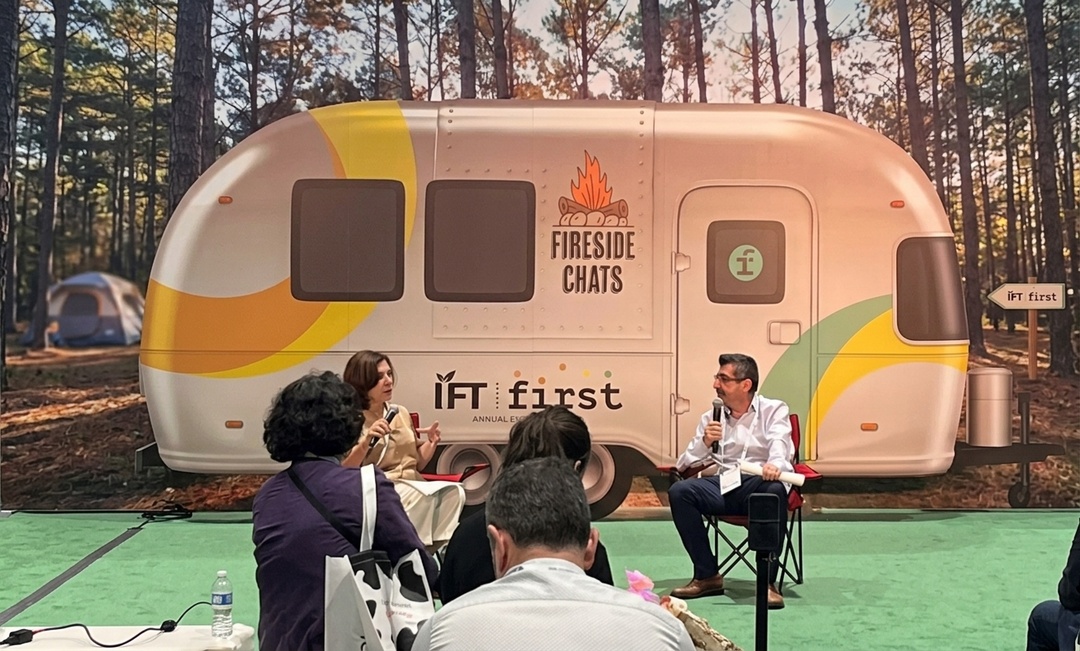
IFT FIRST 2023 — Fireside Chat with Maria Velissariou, PhD
Ingredient companies have traditionally competed through functionality, performance and technical specifications. But functional advantages can be replicated. The deeper opportunity is to transform an ingredient from something a customer can substitute into something that becomes strategically important to the meaning and desirability of its brand.
How, then, can an ingredient company stop selling something its competitors can replicate—and become an indispensable strategic partner to its customers?
At IFT FIRST 2023, Dr. Constantinos Pantidos, Founder of BRAND AVIATORS®, and Dr. Maria Velissariou explored how food ingredient and packaging companies can move beyond functional benefits to create tailored ingredients, compelling emotional propositions and differentiated experiences that drive client acquisition and business growth.
The discussion, which became the basis of their co-authored white paper From Generic to Extraordinary, challenged the traditional ingredient-supplier model.
An ingredient is rarely just functional. Flavor, texture, aroma, color and even the sound produced when we eat interact with the brain to create an integrated emotional experience. Yet companies often describe ingredients through technical benefits and sensory attributes without connecting them systematically to the deeper human motives those characteristics can satisfy.
This is where THE WHEEL OF MOTIVES® changes the strategic role of the ingredient. By giving emotion structure and mapping the fundamental motives behind human choice, the framework can help an ingredient company move upstream—from responding to a customer's technical brief to identifying emotional territories, innovation opportunities and strategic propositions that could create value for the customer's brand.
The same system then connects that strategic opportunity back to the physical product. A desired emotional territory can be translated into the ingredients, recipes, flavors, textures and sensory properties capable of expressing it. Conversely, an existing ingredient can be decoded to reveal the emotional experiences and brand territories it could potentially support.
Vanilla, for example, no longer needs to compete simply as vanilla. Depending on how it is formulated and experienced, it can contribute to a proposition around reassurance, nostalgia or exoticism. Texture can communicate resistance or indulgence. Bitterness, crunch, irregularity and sensory intensity can work together to embody a more defiant experience.
The significance is therefore much greater than adding emotion to an ingredient story. Emotion becomes a bridge from business strategy and positioning all the way to formulation and sensory design. Instead of measuring how consumers respond to a finished product, emotional understanding can help determine what opportunity to pursue, what proposition to build and ultimately what should be formulated and created.
The result is a fundamental business-model shift:
FROM selling ingredients → TO creating structured emotional experiences.
FROM responding to briefs → TO proactively uncovering opportunities.
FROM being a supplier → TO becoming a strategic innovation partner.
The fireside chat also explored how this thinking had already been applied beyond food ingredients. The long-term collaboration with O-I demonstrated the same principle in another medium: uncover the emotional DNA of client brands and translate it into the shape, texture, material and sensory language of glass packaging.
Across both applications, the underlying logic is the same: understand the human motive, turn it into a strategic territory, and then systematically bring that territory to life through the things companies actually create.
At the center of the conversation was a simple business idea:
When an ingredient carries emotional meaning that is strategically important to your client's brand, it stops being interchangeable.
It becomes part of the client's competitive advantage—and transforms the ingredient company from a supplier of materials into a creator of value, experiences and growth.