
Food Texture — One Example
Food texture is presented here as one of the hundreds of sensory manifestations of PLAY already studied within our framework.
How can PLAY become a sensory experience?
A motive is not experienced only as an abstract psychological state.
It can also be embodied through sensory interaction — through what we touch, feel, hear, see and experience with the body.
For PLAY, sensory manifestations can give physical expression to its core qualities of spontaneity, vitality, release and lightheartedness. Certain sensory properties can invite interaction rather than passive perception, creating an experience that is dynamic, responsive and difficult to experience with complete seriousness.
Featured example
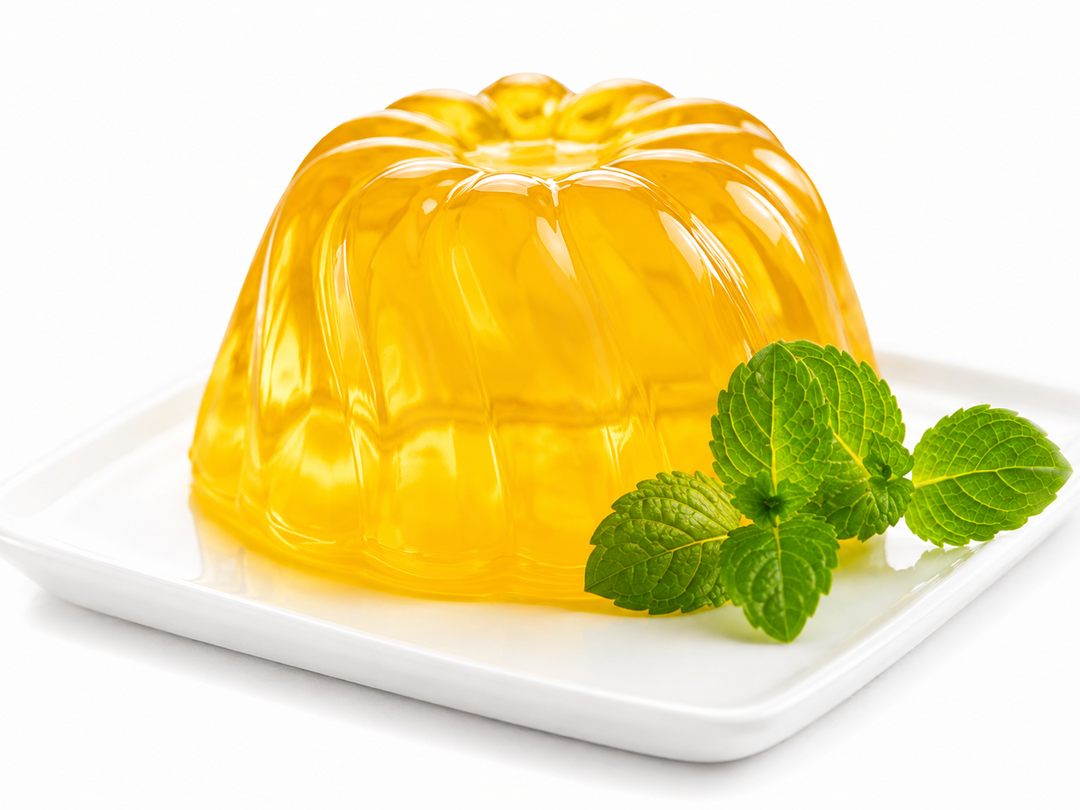
The following example examines gelatine dessert as one of the hundreds of sensory manifestations of PLAY already studied within our framework. Its distinctive physical properties provide a useful illustration of how a sensory experience can embody motivational meaning — and how that relationship can be investigated across biological triggers, neural mechanisms, psychological meaning, embodied responses and cultural reinforcement
One sensory manifestation of the PLAY motive
Gelatine dessert is presented here as one example among hundreds of sensory manifestations of PLAY already studied within our framework.
Its distinctive physical qualities — bounce, wobble, deformation and responsiveness — provide an illustration of how sensory properties can contribute to an experience of spontaneous fun, lightheartedness and playful physical interaction: almost a physical joke for the mouth.
The selected evidence below illustrates the different scientific layers informing this interpretation.
BIOLOGICAL TRIGGER
Tactile play is associated with greater openness to food
THE EVIDENCE
Children who enjoy tactile play — touching, squishing and manipulating materials — tend to show lowered food neophobia and greater willingness to engage with unfamiliar foods.
THE REFERENCES
Coulthard, H. & Thakker, D. (2015). Enjoyment of tactile play is associated with lower food neophobia in preschool children. Journal of the Academy of Nutrition and Dietetics, 115(7).
THE PLAY CONNECTION
The finding establishes an association between enjoyment of tactile play and openness to food interaction. This is relevant to foods whose physical properties invite touching, squishing and manipulation.
NEURAL & SENSORIMOTOR BASIS
Food texture can become something we interact with
THE EVIDENCE
Research into sensory play examines how hands-on interaction with food texture can influence children's engagement with and acceptance of foods.
THE REFERENCES
Mourmans, R. et al. (2026). Hands-on texture: Evaluating texture and target congruency in sensory play on children's food acceptance. Appetite, March.
THE PLAY CONNECTION
This helps establish an important principle: food does not have to be experienced only through eating. Its material properties can become objects of physical interaction. Gelatine's manipulable character makes this particularly relevant to PLAY.
NEURAL & SENSORIMOTOR BASIS
Springiness is perceived through active oral interaction
THE EVIDENCE
Human perception of gel hardness and springiness is related to measurable mechanical properties of agar and gelatine gels, demonstrating the relationship between the physical structure of a gel and its oral sensory perception.
THE REFERENCES
Nakatomi, C. et al. (2023). Correlations of sensory attributes of hardness and springiness of agar and gelatin gels with mechanical properties in human participants. Journal of Oral Science, 65(4), 316–323.
THE PLAY CONNECTION
Springiness and deformation mean that the sensory stimulus changes as the mouth acts upon it. The eater therefore experiences a responsive rather than entirely static physical experience — a useful sensory condition for the expression of PLAY.
PSYCHOLOGICAL MEANING
Texture contributes to the emotional experience of food
THE EVIDENCE
Food texture influences consumer perception and preference and can contribute to the affective experience generated during eating.
THE REFERENCES
Baingana, M. (2024). Food Texture Perception and Its Influence on Consumer Preferences. Journal of Food Sciences, 62, 43–55.
THE PLAY CONNECTION
Texture is therefore not merely a functional property of food. Within the Wheel framework, the unusual bounce, wobble and deformation of gelatine can contribute to the playful quality of the experience as lighthearted and joyful.
PSYCHOLOGICAL MEANING
Touching food changes our relationship with it
THE EVIDENCE
Tactile exposure to food texture can promote food acceptance, demonstrating that physical interaction with food can influence subsequent responses to it.
THE REFERENCES
Nederkoorn, C. et al. (2018). Taste the feeling or feel the tasting: Tactile exposure to food texture promotes food acceptance. Appetite, 120, 297–301.
THE PLAY CONNECTION
Gelatine's tactile qualities allow it to be touched, pressed and explored, creating a less intimidating and more playful way to engage with food.
CULTURAL REINFORCEMENT
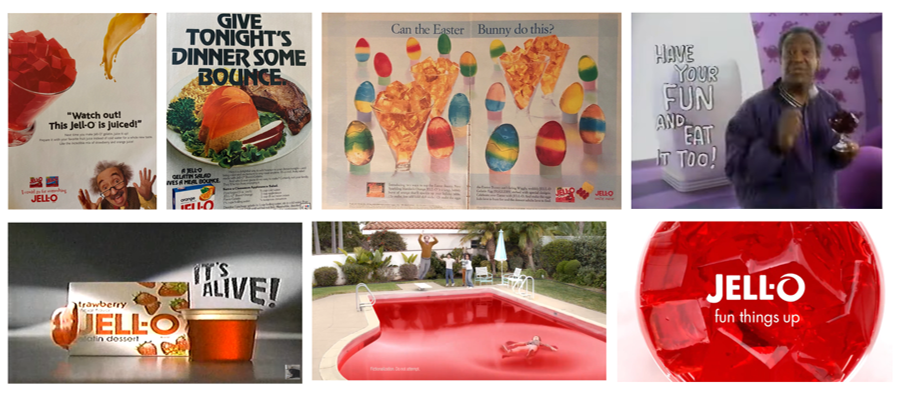
Gelatine dessert communicates fun in everyday life
THE EVIDENCE
Advertising and popular culture consistently portray gelatine desserts as playful, fun and lighthearted.
THE REFERENCES
Historical and contemporary advertising material for Jell-O and similar brands.
THE PLAY CONNECTION
Cultural representation reinforces the interpretation of gelatine dessert as a playful experience, strengthening the association between its sensory qualities and the PLAY motive.