
Brand Stretch: Entering A New Category Without Diluting The Brand
Global Leader in Snacking | Brand & Product Innovation
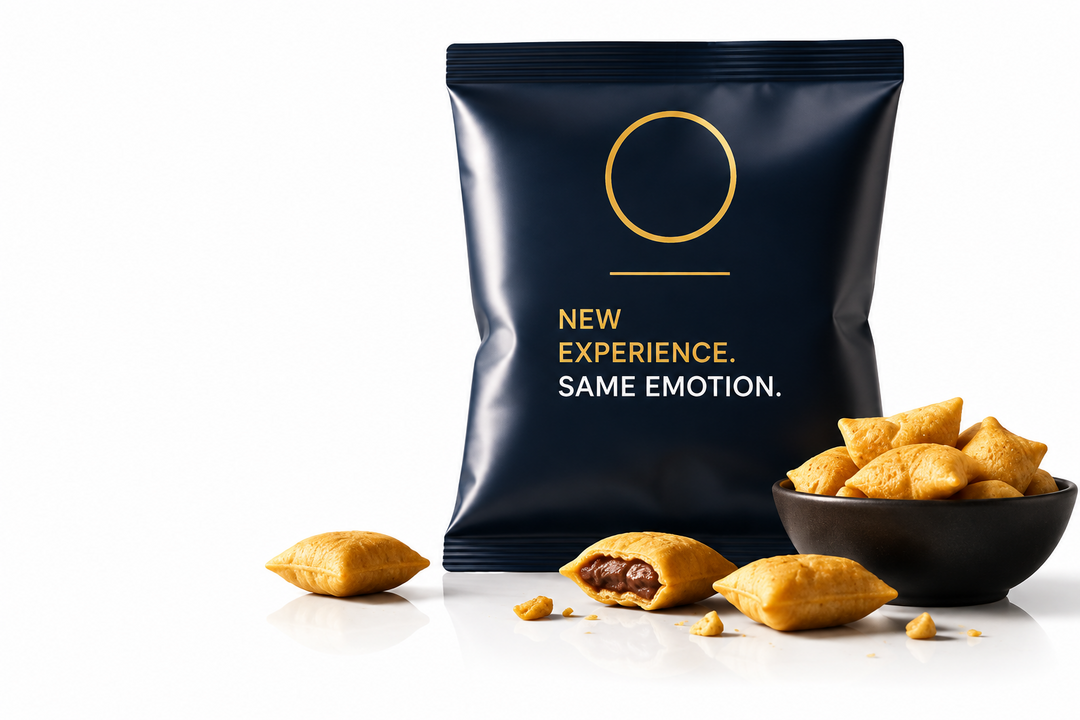
Initial Problem
How do you stretch a powerful brand into a new product category without diluting what made it successful in the first place?
A global leader in snacking wanted to extend one of its established brands into a new product category.
The company had attempted to enter this category for years, exploring different products and approaches, without achieving the desired breakthrough.
The challenge was not simply to create a product that could compete in the new category. It was to bring the emotional essence of the brand into the category, while respecting what consumers fundamentally expect from it.
The objective was therefore more ambitious than conventional brand extension:
Enter the new category in a way that strengthens the brand rather than stretches it thin—while maximizing the chances of consumer acceptance and commercial success.
Diagnostic Insight
Brand stretch is ultimately a question of motivational fit.
Using THE WHEEL OF MOTIVES®, we examined two different motivational systems:
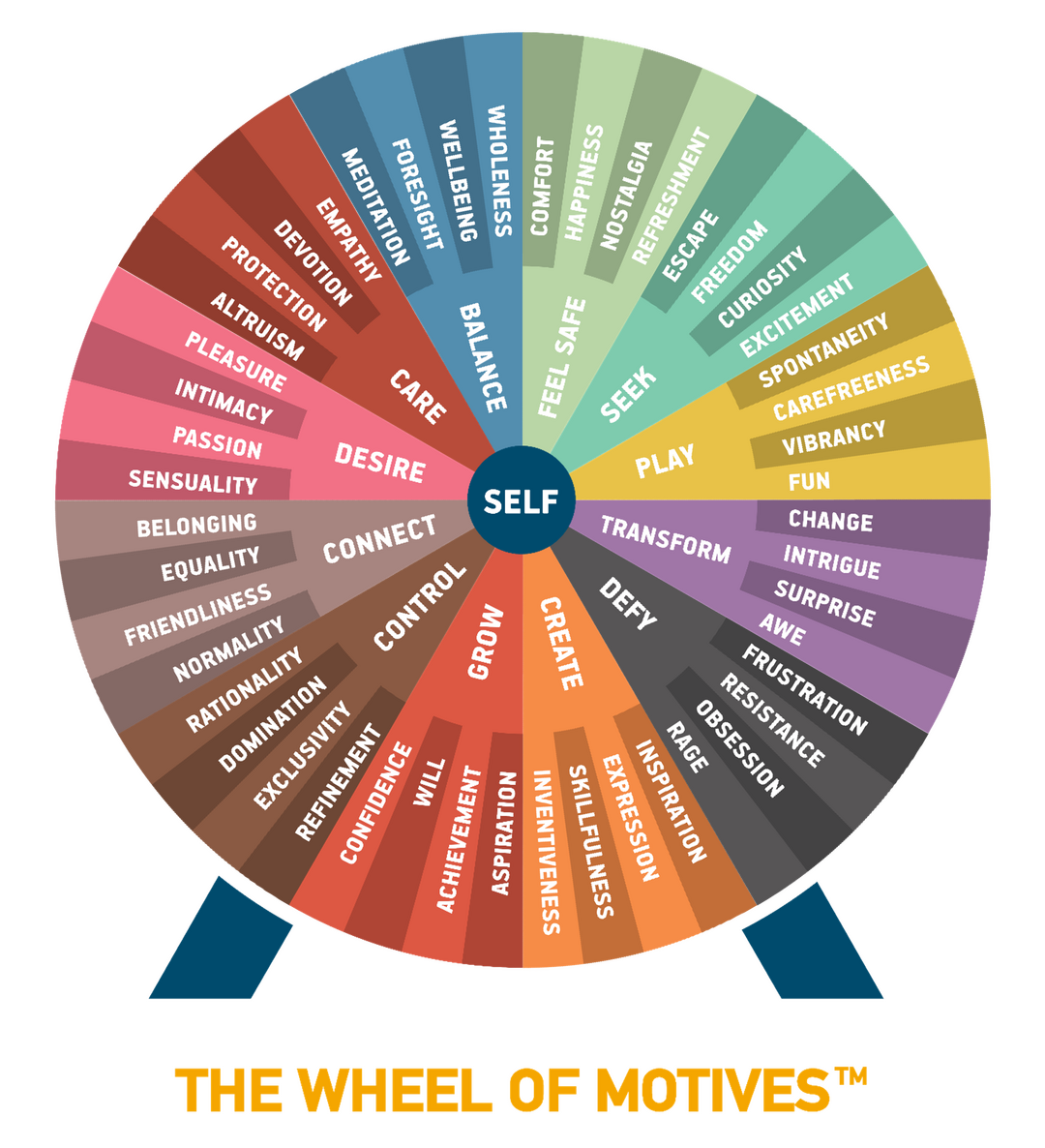
What fundamentally drives the brand?
The brand was rooted primarily in CONNECT and TRANSFORM.
What fundamentally drives consumer desire within the new category?
The category was driven primarily by GROW and CONNECT.
CONNECT
CONNECT became the bridge between the existing brand and the new category.
Instead of forcing the brand to imitate the established narratives and conventions of the category—or allowing the category to overpower the brand—we could build the extension around an emotional territory that was simultaneously authentic to the brand and relevant to the category.
That intersection became the foundation for the new strategy.
Intervention
We started with the desired emotion—not the product attributes.
We developed a compelling emotional concept by aligning the motivational DNA of the brand with the motivational expectations of the new category.
Rather than being carried away by the dominant narratives of the category—which were driven partly by a different motive—we identified the emotional territory that the brand could credibly own.
We then translated this territory into a complete innovation system.
Just as importantly, we trained the teams to think differently about food innovation.
A food product is not simply a collection of attributes. It is an emotional system.
Shape, texture, flavor, ingredients, packaging, language and communication work together to create a particular human experience.
The team understood that the objective was no longer simply to outperform competitors on individual product features.
We had to win at a deeper emotional level.
The strategy defined:
Product truths and innovation guardrails
What the product should—and should not—communicate
Optimized product shapes and forms
Ingredient direction
Flavor and texture principles
Packaging cues
Communication principles
The semantic signals that should consistently reinforce the desired emotion
BEFORE
The company had tried for years to penetrate the category through different approaches without achieving the desired breakthrough.
The natural tendency was to follow the established logic of the category: create a recognizable category product, differentiate it through functional features, and then find a way to attach the existing brand to it.
The result risked being another technically differentiated product with an awkward relationship to the parent brand.
AFTER
The motivational analysis produced a fundamentally different answer.
By fusing the emotional truth of the brand with the emotional expectations of the category, the team developed a completely new product and positioning proposition.
The framework unlocked the team creatively.
Instead of asking:
“How can our brand make a product in this category?”
they began asking:
“What should people feel when our brand enters this category—and how can every element of the product deliver that feeling?”
That shift inspired the development of a genuinely new product rather than another variation of what already existed.
Outcome
Successful entry into a new product category.
The new proposition was successfully launched, enabling the brand to establish itself in a category it had struggled to penetrate despite previous attempts.
More importantly, the extension did not dilute the parent brand.
It enriched it.
The new product expanded what the brand could credibly mean to consumers while remaining anchored in its fundamental emotional truth.
The result demonstrated that successful brand stretch is not about making a brand fit into another category.
It is about discovering the emotional territory where brand truth and category desire naturally meet.
The Principle
START WITH THE EMOTIONAL. THEN DESIGN THE FUNCTIONAL.
STUDY THE MOTIVES
Study the motives behind the brand.
Then study the motives driving the category.
UNDERSTAND THE LANDSCAPE
Understand the existing competitive landscape and identify the emotional white space others have left unoccupied.
FUSE BRAND & CATEGORY
Fuse brand and category into a unique answer:
What do consumers want to feel from this category that this brand is uniquely equipped to deliver?
THEN BUILD THE PRODUCT
Only then should product development begin.
Engineer that feeling through shape, flavor, texture, ingredients, packaging and communication.
OWN THE EMOTIONAL TERRITORY
Give every brand a distinct emotional role.
Build a portfolio that covers human motivations, not just markets.
Have a similar challenge?
Let's explore how human motives can unlock meaning, differentiation and growth for your brand.