
From Brand DNA to Brand Experience
The Biology Behind Memorable Brands
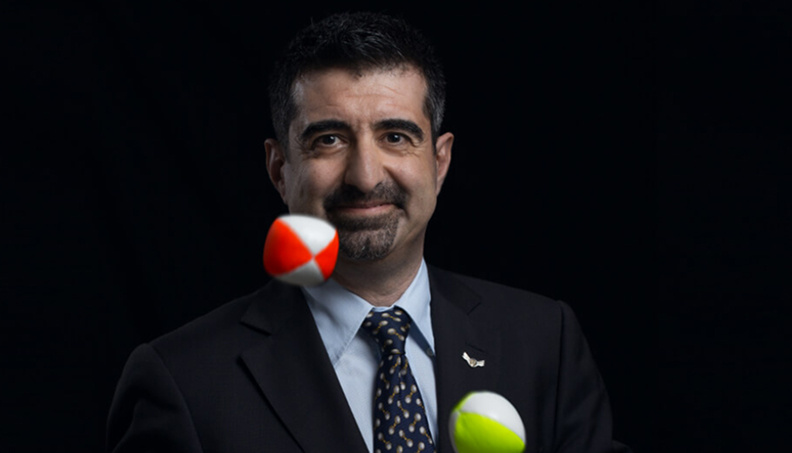
What makes a brand recognizable beyond its logo, product or advertising? And how can something as intangible as a brand's emotional DNA become a coherent experience people can actually see, hear, touch and feel?
In this interview with STUDIOVN, Dr. Constantinos Pantidos, Founder of BRAND AVIATORS™ and creator of THE WHEEL OF MOTIVES™, explores why building memorable brands requires going beyond functional benefits, traditional USPs and creative intuition to understand the deeper biological forces behind human behaviour and choice.
The discussion begins with brand DNA and two fundamental questions: “Who am I?” and “What do I stand for?” Understanding the deeper motivational core of a brand provides the foundation for defining its strategy and positioning—the emotional territory it can authentically and distinctively own.
But discovering that DNA is only the beginning. The next question is “How am I recognized?” A positioning becomes powerful when it can be systematically translated into everything through which people encounter the brand: communication, concepts, products, environments, colors, shapes, sounds, scents, materials and experiences.
At the heart of the conversation are THE WHEEL OF MOTIVES™ and THE PATHWAYS OF HUMAN BEHAVIOR™, frameworks developed to connect neuroscience, psychology, behavioural science and marketing. They provide a structured way to move from the deeper human motives behind choice, to brand meaning and positioning, and from positioning to tangible and multisensory execution.
The interview also addresses a fundamental challenge in marketing: while much of human choice happens outside conscious awareness, it is not arbitrary. The brain responds to patterns and associations that already carry meaning. When strategy, communication, product and sensory experience reinforce the same underlying motivational territory, touchpoints stop behaving like isolated executions and begin building the same meaning in the consumer's mind.
This changes the role of emotion in brand building. Emotion is no longer something added to a product through storytelling or measured after an experience has been created. It becomes an organizing principle—from understanding the brand's deeper DNA, to defining what it should stand for, to designing how that meaning is actually experienced.
The central idea: memorable brands don't simply communicate an emotion. They build from a deeper human motive outward—turning brand DNA into strategy, strategy into positioning, and positioning into a coherent experience people can recognize and feel.